


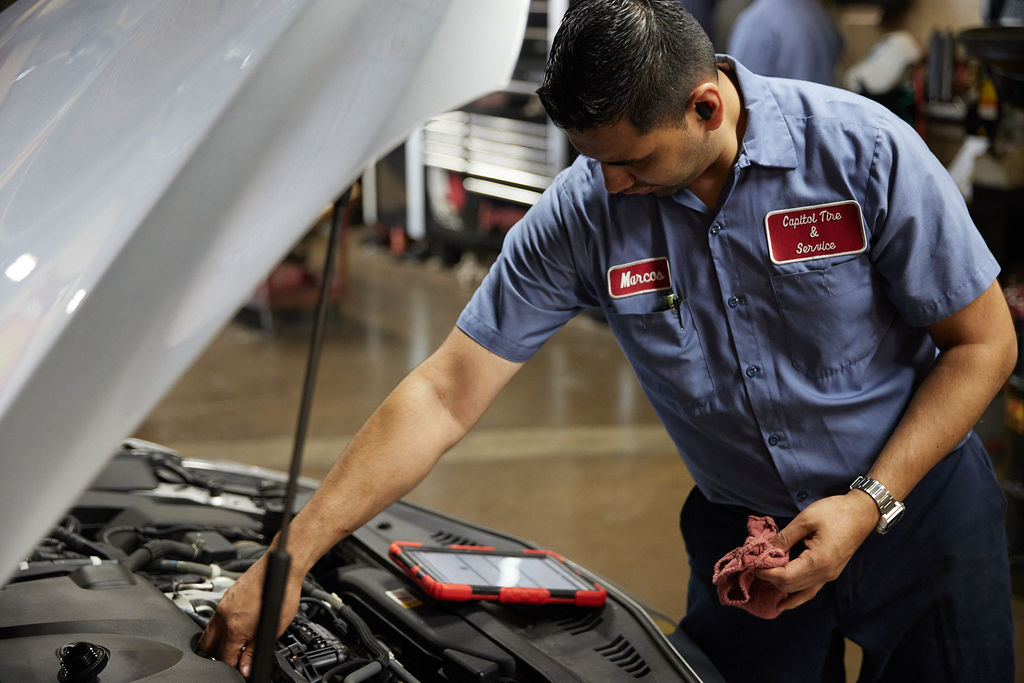
The Real Risk Behind Your Engine’s Timing System
Drivers rarely think about their engine’s timing components until something goes wrong. However, when a timing belt or timing chain fails, the consequences are often immediate and severe. In many cases, a failure can result in complete engine shutdown and significant internal damage that requires extensive repair or even full engine replacement.
At Capitol Tire & Service in Madison, Wisconsin, timing system issues are among the most expensive problems we diagnose, not because they are inherently complex, but because they are often ignored until failure occurs. Many drivers are unaware of how critical these components are until they experience a breakdown.
For owners of Toyota, Honda, and General Motors vehicles, understanding how timing systems function, how they fail, and when they should be serviced is essential to avoiding unnecessary expense and maintaining long-term vehicle reliability.
Timing Belt vs Timing Chain: Key Differences That Matter
The timing system is responsible for synchronizing the crankshaft and camshaft so that engine valves open and close at precisely the correct time. This synchronization is critical for proper combustion and overall engine performance.
Timing belts are constructed from reinforced rubber and are designed to operate quietly. Because they are made from composite materials, they wear over time and require scheduled replacement. Timing chains, on the other hand, are metal components that operate within the engine and are lubricated by engine oil. This design allows them to last longer, but not indefinitely.
While timing chains are often marketed as lifetime components, real-world experience shows that they are still subject to stretching, wear, and eventual failure. The key distinction is not simply lifespan, but how each system fails and the type of maintenance required to prevent damage.
How Timing Components Fail in Real-World Conditions
Timing belt failure is typically sudden and without warning. When a belt breaks, the engine immediately loses synchronization. In many engines, particularly interference engines commonly found in Honda and some Toyota models, this results in internal contact between pistons and valves. The damage can be extensive and often requires major engine repair.
Timing chains tend to fail more gradually. As the chain stretches over time, it can lead to improper timing, which affects engine performance and efficiency. Drivers may notice a rattling noise during cold starts, a persistent check engine light, or reduced power. These early symptoms are often overlooked or misinterpreted.
From a diagnostic standpoint, one of the most common issues we encounter is delayed service due to misdiagnosis. Drivers frequently assume that noises or performance issues are minor, when in reality they are early indicators of timing system wear. Addressing these symptoms early can prevent significantly higher repair costs later.
What Toyota, Honda, and GM Drivers Should Know
Toyota has transitioned many of its newer models from timing belts to timing chains. While this reduces the need for routine replacement, it does not eliminate the need for inspection. High-mileage Toyota engines can still experience timing chain stretch, especially when maintenance has been inconsistent.
Honda engines often utilize interference designs, making timing belt maintenance especially important. If a timing belt fails in one of these engines, internal damage is almost unavoidable. Adhering to manufacturer-recommended replacement intervals is critical to preventing costly repairs.
General Motors vehicles, particularly those equipped with the 3.6L engine, are known for timing chain stretch issues. These problems often present as drivability concerns and diagnostic trouble codes before progressing to more severe engine conditions. Early inspection can identify these issues before they escalate.
Understanding these manufacturer-specific characteristics allows drivers to make informed decisions and approach maintenance proactively rather than reactively.
Cost Considerations and Service Timing in Madison, WI
One of the most important factors for vehicle owners is cost. Timing belt replacement is a planned maintenance service and is typically far less expensive than repairing engine damage caused by failure. In contrast, timing chain repairs can be more complex and costly due to their internal placement within the engine.
In Madison and surrounding areas such as Middleton, Verona, and Fitchburg, labor costs and vehicle type both influence the final price. However, the difference between preventive service and reactive repair is often substantial. A scheduled timing belt replacement may cost a fraction of what is required to rebuild or replace an engine after failure.
Drivers who are unsure about their vehicle’s maintenance history should consider scheduling a professional inspection. A thorough evaluation can identify wear, leaks, or early signs of failure before they lead to more serious problems. For example, scheduling an engine diagnostics service through Capitol Tire & Service can provide clarity on the condition of your vehicle and help you plan appropriately. You can learn more about available services by visiting auto repair services in Madison or exploring engine diagnostics services. For additional credibility on technician expertise and certification standards, you can also reference ASE certification standards.
When to Inspect or Replace Your Timing System
Timing belts should generally be replaced according to manufacturer guidelines, typically between 60,000 and 100,000 miles. Delaying replacement increases the risk of sudden failure and severe engine damage.
Timing chains do not follow a fixed replacement schedule, but they should be inspected periodically, particularly in high-mileage vehicles. Warning signs such as unusual engine noise, misfires, oil leaks near the timing cover, or difficulty starting the engine should be evaluated promptly.
Preventive maintenance remains the most effective way to control long-term repair costs. Addressing timing system issues early reduces the likelihood of unexpected breakdowns and ensures consistent engine performance. If you are experiencing symptoms or approaching a major service interval, it is advisable to consult a qualified technician for an accurate assessment.
Frequently Asked Questions About Timing Belts and Timing Chains
Is a timing chain better than a timing belt?
A timing chain typically lasts longer than a timing belt, but it is not maintenance-free and can be more expensive to repair if it fails.
What happens if a timing belt breaks while driving?
In many engines, especially interference engines, a broken timing belt can cause severe internal damage, often requiring major engine repair.
When should I replace my timing belt?
Most timing belts should be replaced between 60,000 and 100,000 miles, depending on the manufacturer’s recommendations.
Schedule Timing System Service with a Trusted Local Shop
Timing system issues are not always obvious, but the consequences of neglect can be severe. Capitol Tire & Service has been serving the Madison community since 1985, providing reliable and relationship-focused auto repair backed by ASE-certified technicians and trusted industry affiliations.
Our team has extensive experience diagnosing and servicing timing systems in Toyota, Honda, and GM vehicles. We focus on accurate diagnostics, transparent recommendations, and long-term vehicle reliability for every customer.
To schedule an inspection or service, contact our team directly at (608) 271-9009 or visit our contact page to book an appointment online.

Meet Bert, Capitol Tire and Service’s owner! With over 30 years in the automotive repair industry, his commitment to excellence has earned him an ASE Certification as a Certified Master Technician with a L1 (Advanced Engine Performance Specialist). In addition, he is Master ASE Engine Machinist Certified and ASE Under Car Specialist. He is a graduate of MATC auto tech program with an Associate Degree in Applied Science. He enjoys the daily challenge that the automobile delivers and the satisfaction of keeping them going. Bert likes to spend his weekends with his wife, Kelli, two daughters and his best buddy, Scout. They enjoy outdoor family activities such as: camping, boating, fishing and snowmobiling.