


Why Brake Recommendations Feel Confusing
Drivers in Madison face a unique mix of conditions that put extra demands on their braking systems. Daily commutes along the Beltline, frequent stop-and-go driving near campus and downtown, short trips during colder months, and winter roads treated with salt and brine all contribute to brake wear that doesn’t always follow mileage-based expectations.
Because of this, being told you need new brake pads, rotors, or possibly both can understandably raise questions. Brake service is one of the most common automotive repairs in Madison, yet it is also one of the most misunderstood, often because the reasoning behind recommendations is not clearly explained.
After decades of inspecting and repairing brake systems in real-world Wisconsin driving conditions, one fact remains consistent: there is no universal brake repair solution. The correct recommendation depends on how and where the vehicle is driven, the condition of the braking components, and what a detailed professional inspection reveals at that moment in time.
This article explains how brake pads and rotors work together, when replacing pads alone is appropriate, when rotors require service, and how experienced mechanics evaluate brake systems using measurement and inspection, not assumptions. It also outlines what a proper brake inspection involves and how local Madison driving conditions influence wear patterns, so you can make informed, confident decisions about your vehicle’s safety.
Brake Pads vs. Rotors: Understanding Their Roles
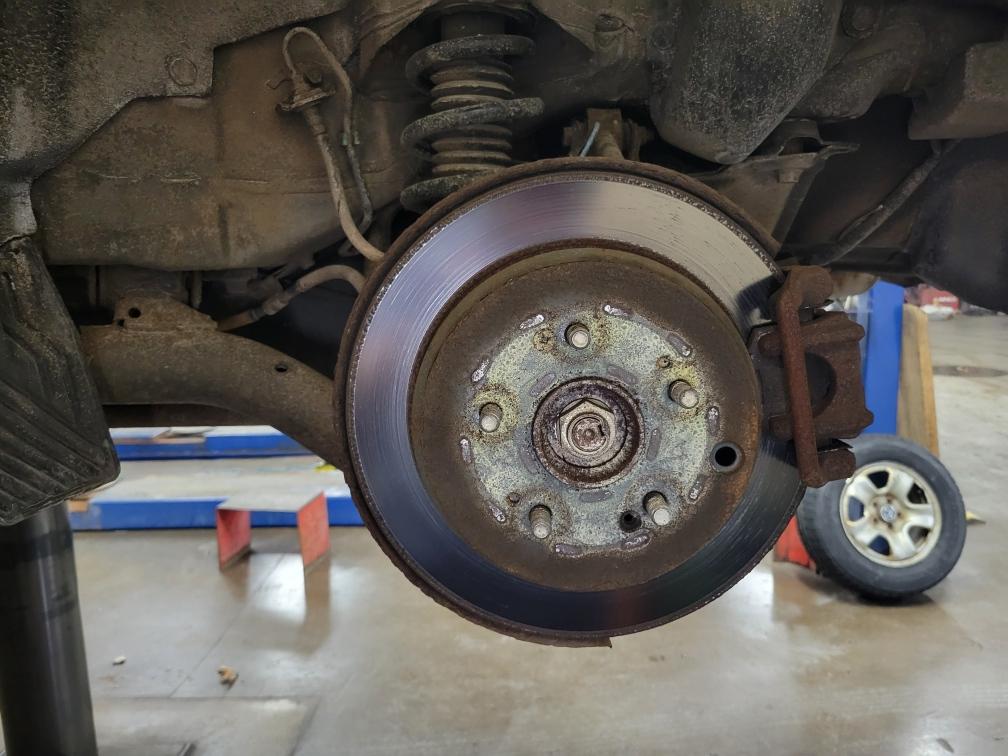
Brake pads and rotors function as a system, but each component serves a distinct purpose. Understanding how these parts interact helps drivers better evaluate recommendations and recognize why two vehicles with similar mileage may require very different brake service approaches.
Brake pads are engineered to wear down over time. When you apply the brakes, the pads create friction against the rotors, the smooth metal discs attached to the wheels, slowing the vehicle in a controlled and predictable manner.
In professional terms, brake pads are consumable components designed for regular replacement, while rotors are long-term components whose condition must be evaluated carefully rather than assumed.
For Madison-area drivers, factors such as stop-and-go traffic, winter road salt, short-trip driving, and extended periods of winter moisture often accelerate brake pad wear. We frequently see vehicles with adequate mileage intervals still showing advanced pad wear simply because of driving environment rather than driving distance. This does not automatically indicate rotor failure, but it does make careful inspection essential.
When Replacing Brake Pads Is Sufficient
In many cases, replacing the brake pads alone is both safe and appropriate.
Based on thousands of inspections performed in our shop, pad-only replacements are typically recommended when rotor thickness remains within manufacturer safety specifications, rotor surfaces are smooth and free of excessive scoring, and there is no vibration, pulsation, or steering feedback during braking.
A professional brake inspection evaluates far more than pad thickness. It involves measuring rotor thickness, inspecting calipers and hardware for proper movement, checking brake fluid condition, and verifying that braking force is evenly distributed across all wheels to maintain safe handling and stopping control. Rotor condition, caliper operation, and braking balance are all assessed to ensure safe, consistent stopping performance.
Routine inspections, often performed alongside other maintenance help identify issues early and reduce the likelihood of more extensive repairs later. This is why brake evaluations are frequently coordinated with other services described on our Madison auto repair services page, where we outline how inspections and maintenance work together to prevent larger repairs.
When Rotors Require Service and Why Replacement Is Not Always Necessary
Although rotors last longer than brake pads, they are still subject to wear and environmental damage. Heat, moisture, corrosion, and driving habits all influence how long rotors remain serviceable, which is why visual inspection alone is never sufficient when evaluating rotor condition.
Rotors typically require service when they wear beyond minimum thickness specifications, experience heat-related distortion or warping, or develop corrosion caused by prolonged exposure to winter road salt.
In some situations, rotors may be resurfaced to restore a smooth braking surface. In others, replacement is the safest and most reliable option. For drivers who want a general, non-commercial overview of how brake systems function and why maintenance matters, there is helpful federal guidance available on brake system safety and how vehicle braking systems work, which can be reviewed through the vehicle brake system safety guidelines published by the National Highway Traffic Safety Administration. The determining factor is measurement and condition, not mileage or routine assumptions.
One insight we regularly share with customers is that delaying brake pad replacement often leads to avoidable rotor damage. In our shop, we commonly see rotors that could have remained serviceable if pads had been addressed earlier. This is especially true in Wisconsin, where corrosion can accelerate wear once protective pad material is gone. Addressing brake noise, vibration, or warning indicators early often reduces overall repair costs.
Drivers experiencing changes in braking performance may benefit from combining a professional tire and brake service in Madison, WI visit with a full inspection to ensure both stopping power and vehicle stability are properly addressed.
When Both Brake Pads and Rotors Are Recommended
There are circumstances where replacing both brake pads and rotors is the correct course of action. In these situations, replacing only one component can compromise braking performance, shorten component lifespan, or result in uneven wear that affects vehicle safety.
Based on professional experience, replacing both brake pads and rotors is typically recommended when brake pads are worn beyond their usable range, rotors show deep grooves, excessive corrosion, or heat damage, or when braking vibration begins to affect steering control or stopping distance.
In Madison’s climate, corrosion is a frequent contributing factor—particularly for vehicles driven infrequently or used primarily for short trips during winter months.
Pro Tip: A brake warning light or vibration does not automatically mean a complete brake replacement is required. It does, however, indicate the need for a timely professional inspection.
FAQ
How long do brakes typically last in Madison, WI driving conditions?
Brake lifespan varies widely depending on driving habits, vehicle type, and local conditions. In Madison, frequent stop-and-go traffic, short trips, winter moisture, and road salt all contribute to accelerated wear. Because of this variability, mileage alone is not a reliable indicator. Regular brake inspections provide the most accurate assessment of remaining brake life.
Is it safe to continue driving if brake pads are worn or making noise?
Driving with worn brake pads is not recommended. Reduced pad material limits stopping ability and can quickly lead to rotor damage once the protective friction layer is gone. Brake noise, vibration, or changes in pedal feel should be evaluated promptly to avoid safety risks and more extensive repairs.
Do brake services always require replacing both pads and rotors?
No. Brake service recommendations should always be based on inspection findings, including rotor thickness, surface condition, and braking performance. In many cases, rotors remain serviceable when pads are replaced. Replacing both components is only necessary when measurements or wear patterns indicate it is the safest option.
Clear Answers, Honest Recommendations
Brake service decisions should be based on accurate information, careful inspection, and open communication.
At Capitol Tire & Service, our ASE-certified technicians have served Madison-area drivers since 1985. As a NAPA Auto Care Center and Bridgestone/Firestone affiliated dealer, our focus remains on vehicle safety, reliability, and long-term customer trust.
If you have questions or would like a professional brake inspection, our team is here to help. Call (608) 271-9009 to speak directly with our staff, or visit our contact page to schedule an appointment.
Your braking system plays a critical role in protecting you, your passengers, and others on the road. Make sure the recommendations you receive are based on experience, precision, and professionalism.

Meet Bert, Capitol Tire and Service’s owner! With over 30 years in the automotive repair industry, his commitment to excellence has earned him an ASE Certification as a Certified Master Technician with a L1 (Advanced Engine Performance Specialist). In addition, he is Master ASE Engine Machinist Certified and ASE Under Car Specialist. He is a graduate of MATC auto tech program with an Associate Degree in Applied Science. He enjoys the daily challenge that the automobile delivers and the satisfaction of keeping them going. Bert likes to spend his weekends with his wife, Kelli, two daughters and his best buddy, Scout. They enjoy outdoor family activities such as: camping, boating, fishing and snowmobiling.