

A check engine light can create immediate concern for any Ford F-150 owner. Whether the truck is used for commuting, towing, or work-related driving, warning lights often raise questions about reliability, repair costs, and whether the vehicle is safe to continue driving.
One of the biggest misconceptions about check engine lights is that the warning automatically identifies the exact repair needed. In reality, the light simply indicates that one or more systems are operating outside normal parameters. Modern Ford F-150 models rely on a network of sensors, emissions controls, fuel management systems, and onboard computers that constantly monitor engine performance.
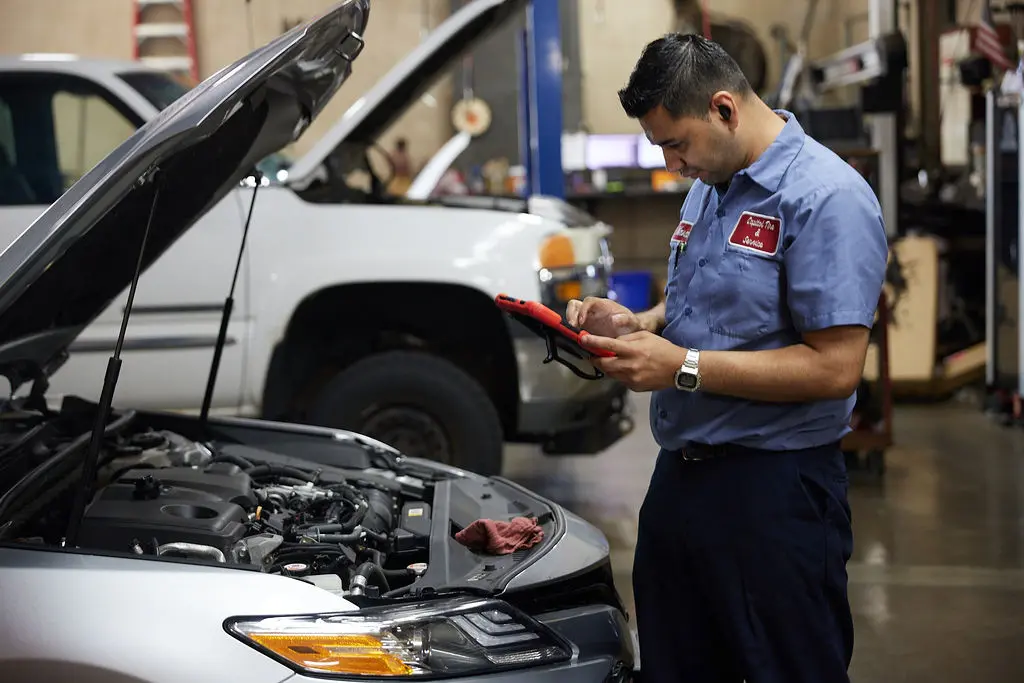
At Capitol Tire & Service in Madison, Wisconsin, our ASE-certified technicians regularly diagnose warning light and drivability concerns on Ford trucks. In many cases, drivers notice symptoms such as rough idle, hesitation during acceleration, reduced fuel economy, or intermittent power loss before the warning light appears.
Common Ford F-150 Symptoms That Trigger a Check Engine Light
Many Ford F-150 warning light issues begin with subtle drivability changes. Rough idle conditions, shaking at stoplights, hesitation under acceleration, or reduced towing performance are all common early warning signs.
A flashing check engine light should never be ignored. Unlike a steady light, a flashing warning often indicates an active misfire severe enough to damage the catalytic converter. Drivers may notice shaking, poor throttle response, or sudden power loss during acceleration.
Reduced fuel economy is another common symptom. Oxygen sensor failures, vacuum leaks, EVAP system problems, and fuel trim imbalances can all force the engine to consume more fuel than normal.
Hard starting or extended crank times may also point toward ignition, sensor, or fuel delivery concerns, especially during colder Wisconsin temperatures.
Ignition and Misfire Problems on Ford F-150s
Ignition system failures are among the most common causes of check engine lights on Ford F-150 models. Modern engines depend on precise combustion timing, strong ignition performance, and accurate fuel delivery to operate efficiently.
EcoBoost-equipped trucks, including the 3.5L EcoBoost and 2.7L EcoBoost platforms, place additional stress on ignition components under towing loads or heavy acceleration. Weak ignition coils or worn spark plugs may struggle to maintain proper combustion under boost pressure.
At Capitol Tire & Service, we commonly see Ford F-150 owners report rough idle conditions, intermittent shaking, hesitation during acceleration, or reduced power before a warning light appears.
One of the challenges with misfire diagnostics is that multiple systems can create similar symptoms. Ignition coils, fuel injectors, carbon buildup, vacuum leaks, and fuel delivery problems may all trigger similar fault codes.
Professional testing helps identify the root cause rather than replacing parts based on assumptions. Drivers experiencing electrical or ignition-related concerns can learn more about our electrical diagnostics services for Ford trucks and modern vehicles.
EVAP System and Emissions-Related Problems
Emissions system faults are another major source of check engine lights on Ford F-150 models.
The EVAP system prevents fuel vapors from escaping into the atmosphere. Small leaks, faulty purge valves, damaged vent valves, or even a loose gas cap can trigger warning lights and emissions-related codes.
Oxygen sensor failures are also common, particularly on higher-mileage trucks. When sensors begin sending inaccurate readings, drivers may experience rough idle conditions, reduced fuel economy, or poor throttle response.
Catalytic converter efficiency codes are another issue we frequently diagnose. However, the converter itself is not always the root problem. Persistent misfires, fuel mixture imbalances, and unresolved ignition issues can all place excessive stress on the catalytic converter over time.
Accurate diagnostics are important because multiple components can trigger similar warning codes. Proper testing helps prevent unnecessary repairs while identifying the actual source of the issue.
Why Modern Ford F-150 Diagnostics Are More Complex
Modern Ford F-150 trucks are significantly more advanced than previous generations. Today’s models rely on integrated electronic systems, advanced fuel injection, turbocharger management, and emissions monitoring systems that continuously communicate with onboard computers.
As a result, a single warning light may involve multiple systems working together. A fault code related to an oxygen sensor, for example, may actually be caused by ignition issues, fuel delivery concerns, vacuum leaks, or combustion irregularities.
EcoBoost engines add another layer of diagnostic complexity. Carbon buildup, boost leaks, sensor failures, and turbocharger-related concerns can all contribute to intermittent warning lights and drivability complaints.
At Capitol Tire & Service, we regularly perform auto repair and diagnostic services for Ford truck owners throughout the Madison area. Our technicians focus on identifying the root cause of warning lights rather than simply replacing parts based on stored codes.
Why Early Diagnostics Matter
Many Ford F-150 owners continue driving for weeks or even months after a warning light first appears, especially if the truck still seems to run normally. However, intermittent symptoms often become more severe over time.
We frequently see situations where a small drivability issue eventually develops into a much larger repair because the original warning signs were ignored. What may begin as a minor ignition or sensor concern can gradually affect fuel efficiency, engine performance, emissions systems, and overall reliability.
Ford trucks used for towing, hauling equipment, or daily commuting often place additional stress on ignition and fuel delivery systems. Under heavier loads, small performance problems can become more noticeable and may accelerate wear on related components.
Many serious repair problems begin as relatively minor drivability concerns. A small ignition issue or intermittent sensor failure may initially seem harmless but can eventually lead to larger and more expensive repairs if ignored.
Unresolved misfires can damage catalytic converters, while fuel delivery and emissions-related concerns may gradually affect performance, fuel economy, and long-term reliability.
At the same time, not every check engine light indicates catastrophic engine failure. The key is determining whether the vehicle is safe to continue driving and identifying the underlying issue before the problem escalates.
For truck owners who rely on their F-150 daily, early diagnosis often prevents larger repair costs and helps maintain long-term reliability.
Frequently Asked Questions About Ford F-150 Check Engine Lights
Can I continue driving my Ford F-150 if the check engine light is on?
A steady warning light may indicate a less urgent issue, while a flashing check engine light typically signals a more severe problem such as an active misfire. If the truck is running rough, losing power, or shaking during acceleration, it should be inspected as soon as possible.
Why does my Ford F-150 check engine light flash during acceleration?
Flashing warning lights during acceleration are commonly associated with engine misfires. Ignition coil failures, worn spark plugs, fuel delivery issues, or turbocharger-related concerns can all contribute to this condition.
Why is professional diagnosis important for check engine lights?
The same fault code can have multiple potential causes. Proper diagnostics help identify the actual source of the problem rather than replacing parts unnecessarily.
Schedule Ford F-150 Diagnostics at Capitol Tire & Service
When your Ford F-150 check engine light comes on, accurate diagnostics can make the difference between a manageable repair and a significantly more expensive problem later.
At Capitol Tire & Service, our ASE-certified technicians provide professional diagnostics and repair services for truck owners throughout Madison, Wisconsin. As a NAPA Auto Care Center and Bridgestone/Firestone affiliated dealer, we focus on honest recommendations, accurate inspections, and long-term vehicle reliability.
Whether your truck is experiencing rough idle conditions, intermittent warning lights, or drivability concerns, our team can help identify the source of the issue using advanced diagnostic equipment and real-world repair experience.
To schedule a diagnostic inspection or speak with our team, visit our contact page or call (608) 271-9009

Meet Bert, Capitol Tire and Service’s owner! With over 30 years in the automotive repair industry, his commitment to excellence has earned him an ASE Certification as a Certified Master Technician with a L1 (Advanced Engine Performance Specialist). In addition, he is Master ASE Engine Machinist Certified and ASE Under Car Specialist. He is a graduate of MATC auto tech program with an Associate Degree in Applied Science. He enjoys the daily challenge that the automobile delivers and the satisfaction of keeping them going. Bert likes to spend his weekends with his wife, Kelli, two daughters and his best buddy, Scout. They enjoy outdoor family activities such as: camping, boating, fishing and snowmobiling.