


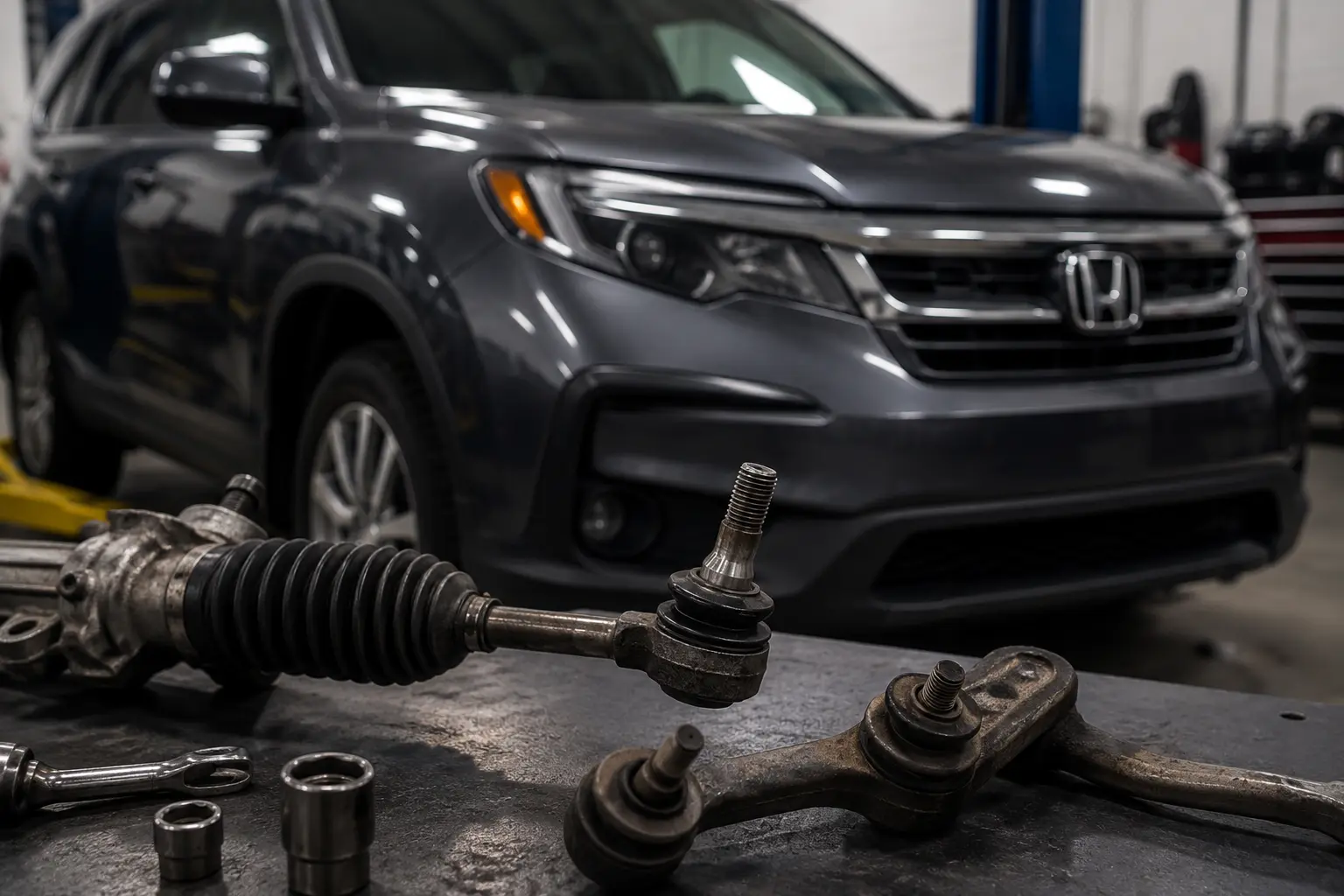
If your Honda Pilot feels loose on the road, wanders at highway speeds, or requires constant steering corrections to stay centered in your lane, it is important to have the vehicle inspected promptly. While many drivers assume the issue is related to wheel alignment, loose steering is often a symptom of wear within the steering or suspension system that can affect handling, stability, and overall vehicle safety.
At Capitol Tire & Service, we have been serving drivers throughout Madison, Middleton, Verona, and Fitchburg since 1985. Our ASE-Certified technicians regularly diagnose steering and handling concerns on Honda Pilot models, and we have found that identifying the source of the problem early can help prevent unnecessary tire wear, additional component damage, and more extensive repairs.
Whether you have noticed excessive play in the steering wheel, unusual noises while turning, or a vehicle that no longer feels as stable as it once did, understanding the potential causes of loose steering can help you make informed decisions about your vehicle’s maintenance and safety.
Signs Your Honda Pilot May Have a Steering or Suspension Problem
Steering and suspension issues rarely develop overnight. In many cases, drivers begin to notice subtle changes in vehicle handling long before the problem becomes severe enough to affect everyday driving.
One of the most common concerns reported by Honda Pilot owners is excessive play in the steering wheel. Drivers often describe the sensation as a disconnect between the steering wheel and the vehicle’s response. The steering wheel may move slightly before the vehicle begins to change direction, creating a feeling of reduced control.
This condition is frequently associated with wear in steering components such as tie rod ends or steering linkage assemblies. As these parts wear over time, additional movement can develop within the system, reducing steering precision and responsiveness.
A properly functioning Honda Pilot should maintain a straight path with minimal steering correction under normal driving conditions. If you find yourself constantly adjusting the steering wheel while traveling on highways around Madison and the surrounding communities, there may be wear within the steering or suspension system.
Our technicians commonly find that worn tie rod ends, ball joints, control arm bushings, wheel bearings, steering rack components, or alignment-related issues can contribute to unstable handling and reduced driver confidence behind the wheel.
Unusual noises often accompany steering and suspension concerns. Clunking, popping, or knocking sounds when turning may indicate that components within the steering or suspension system have developed excessive wear.
These sounds can provide valuable diagnostic information and often point to parts that are no longer maintaining proper alignment, stability, or support. Any unusual noise associated with steering should be evaluated before the condition worsens.
Tires often reveal problems occurring elsewhere in the vehicle. Excessive wear along one edge of the tire, irregular tread patterns, or uneven wear across the tire surface may indicate an underlying steering, suspension, or alignment issue.
When our technicians identify abnormal tire wear, they typically recommend a comprehensive inspection to determine whether worn components are contributing to the problem. Addressing the root cause can help maximize tire life and improve overall vehicle performance.
Many Honda Pilot owners are surprised when steering concerns persist after a wheel alignment service. While alignments are an important part of maintaining proper vehicle handling, they cannot correct worn or damaged steering and suspension components.
If your Honda Pilot continues to feel loose, unstable, or difficult to control after an alignment, additional diagnostic testing is often necessary to identify the underlying cause.
What Causes Loose Steering in a Honda Pilot?
Several different components can contribute to loose steering in a Honda Pilot. Determining the exact cause requires a thorough inspection because many steering and suspension issues produce similar symptoms.
One of the most common causes of loose steering that we encounter is worn tie rod ends. These components connect the steering system to the wheels and play a critical role in maintaining accurate steering response.
As tie rod ends wear, excessive movement develops within the steering system. Drivers may notice loose steering, wandering, uneven tire wear, or reduced responsiveness when turning. Because this wear often occurs gradually, many vehicle owners do not recognize the problem until handling noticeably deteriorates.
Ball joints allow the steering and suspension systems to move smoothly while maintaining proper wheel positioning. Over time, these components can wear and develop excessive play.
When ball joints begin to fail, drivers may experience loose steering, instability, or clunking noises when driving over bumps or turning. In more advanced cases, worn ball joints can significantly affect vehicle safety and should be addressed promptly.
Control arm bushings help absorb road vibrations and maintain proper suspension geometry. As these rubber components age, they can crack, separate, or deteriorate due to normal wear and environmental exposure.
When bushings lose their ability to properly support suspension movement, drivers may notice vague steering feel, instability during braking, and reduced handling performance. These symptoms are often mistaken for alignment problems when the actual issue lies within the suspension system itself.
Although less common than other steering-related concerns, wear within the steering rack can also contribute to loose steering. Internal wear may reduce steering precision and create symptoms that closely resemble other steering or suspension problems.
Because steering rack issues can be difficult to distinguish from other causes without proper testing, accurate diagnosis is essential before any repairs are recommended. At Capitol Tire & Service, our technicians perform a complete inspection to identify the true source of the concern rather than relying on assumptions.
How Our ASE-Certified Technicians Diagnose Loose Steering
At Capitol Tire & Service, we believe that accurate diagnosis is the foundation of every successful repair. Rather than replacing parts based solely on symptoms, our technicians follow a systematic inspection process designed to identify the root cause of the problem.
The diagnostic process often begins with a road test. This allows our technicians to experience the concern firsthand and evaluate how the vehicle behaves under real-world driving conditions.
During the road test, we assess steering response, vehicle tracking, handling characteristics, vibrations, and any unusual noises. These observations help narrow down potential causes and guide the inspection process.
Following the road test, our technicians perform a detailed inspection of the steering and suspension system. Components are evaluated for signs of wear, looseness, damage, or excessive movement that could affect steering performance.
Particular attention is given to tie rod ends, steering linkage assemblies, and steering rack components. Even relatively minor wear can have a noticeable impact on steering precision and vehicle control.
Because the steering and suspension systems work together, a complete diagnosis also includes a thorough suspension inspection. Our technicians examine ball joints, control arms, bushings, wheel bearings, and suspension mounting points to determine whether any of these components are contributing to the steering concern.
In many cases, steering complaints originate from suspension wear rather than the steering system itself, making a comprehensive inspection essential.
Tires often provide valuable insight into the condition of the vehicle. Our technicians carefully inspect tire wear patterns, tread condition, and alignment-related concerns to identify signs of abnormal wear or mechanical issues.
This comprehensive approach helps ensure that we address the underlying cause of the problem rather than simply treating the symptoms.
Why Prompt Steering Repairs Can Save You Money
Many steering and suspension issues begin as relatively minor concerns. Unfortunately, worn components do not improve over time. As wear progresses, additional stress is placed on surrounding parts, increasing the likelihood of further damage.
A component that initially causes only slight steering looseness can eventually contribute to accelerated tire wear, alignment problems, suspension damage, and the need for more extensive professional auto repair services. For example, a worn tie rod end may seem insignificant at first but can gradually affect tire wear and place additional strain on other steering components.
Addressing steering concerns early often helps reduce repair costs, preserve tire life, and maintain safe vehicle operation.
Frequently Asked Questions About Honda Pilot Steering Problems
Is it safe to drive a Honda Pilot with loose steering?
Any noticeable change in steering response should be inspected as soon as possible. While some issues may begin as minor concerns, steering problems can worsen over time and affect your ability to safely control the vehicle.
Can bad tires make my steering feel loose?
Yes. Unevenly worn, damaged, or improperly inflated tires can affect handling and steering feel. However, tire wear is often a symptom of an underlying steering, suspension, or alignment issue rather than the primary cause.
Will a wheel alignment fix loose steering?
Not necessarily. A wheel alignment adjusts the angles of the wheels but cannot repair worn tie rod ends, ball joints, suspension bushings, or steering rack components. If parts are worn, repairs may be necessary before an alignment can fully restore proper handling.
Schedule a Honda Pilot Steering Inspection in Madison, WI
If your Honda Pilot feels loose, wanders while driving, or no longer responds the way it should, it is important to have the vehicle inspected before the problem becomes more serious.
For nearly four decades, Capitol Tire & Service has helped drivers throughout Madison, Middleton, Verona, and Fitchburg diagnose and repair steering and suspension concerns. Our ASE-Certified technicians use a thorough diagnostic process to identify the source of the problem and recommend the repairs your vehicle actually needs.
Whether your Honda Pilot is experiencing worn tie rods, suspension wear, alignment concerns, or another steering-related issue, our team is here to help restore safe and predictable handling. Learn more about our expert steering and suspension repair services or explore our full range of trusted auto repair solutions in Madison.
Call (608) 271-9009 to speak with our team or schedule your Honda Pilot steering inspection today. Early diagnosis can improve vehicle safety, restore handling performance, and help prevent more costly repairs in the future.

Meet Bert, Capitol Tire and Service’s owner! With over 30 years in the automotive repair industry, his commitment to excellence has earned him an ASE Certification as a Certified Master Technician with a L1 (Advanced Engine Performance Specialist). In addition, he is Master ASE Engine Machinist Certified and ASE Under Car Specialist. He is a graduate of MATC auto tech program with an Associate Degree in Applied Science. He enjoys the daily challenge that the automobile delivers and the satisfaction of keeping them going. Bert likes to spend his weekends with his wife, Kelli, two daughters and his best buddy, Scout. They enjoy outdoor family activities such as: camping, boating, fishing and snowmobiling.